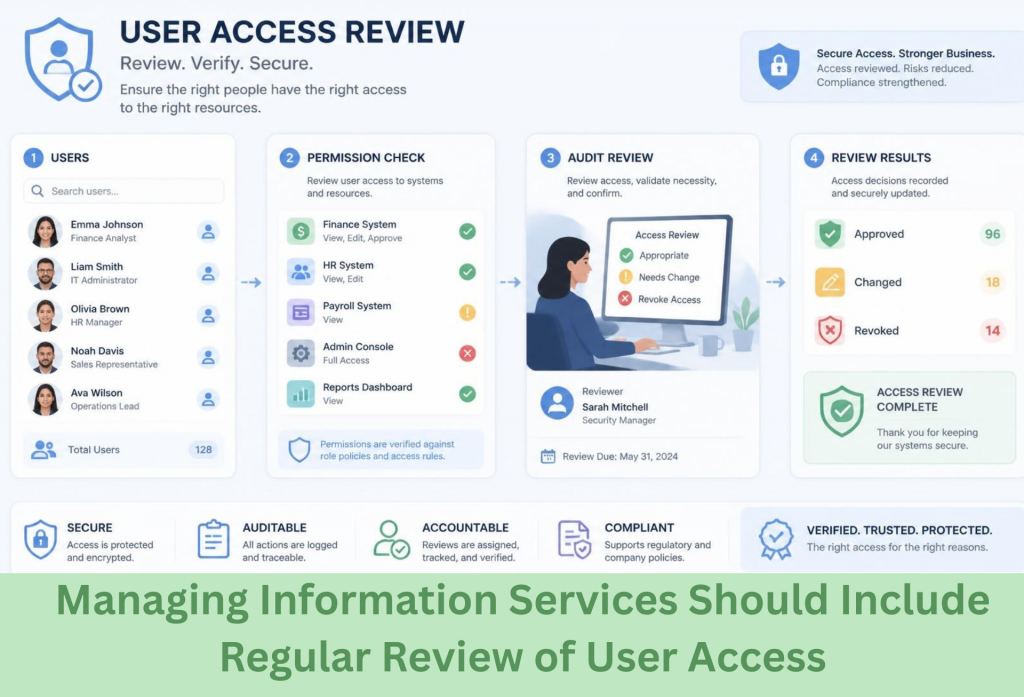
Employees need access to many business systems. Sometimes, extra permissions are required for new projects. However, those permissions rarely disappear afterward. This unnecessary access gradually builds up over time. Additionally, former roles and duties may no longer align with current roles that result in hidden security risks throughout the company. In managing information services user access is often an overlooked factor.
Managing Information Services Should Include Regular Review of User Access
Too Much Access Creates Problems
Not all employees require access to all files. In managing information, more permissions mean more exposure of data, regardless of if it is unintentional. This is because they reinforce and enable cyberattacks to cause greater harm. As such, if one account becomes compromised, attackers gain more opportunities to take advantage of. So, in managing information services, restricting access reduces the potential damage since lesser permissions results in greater overall security.
Staff Changes Require Immediate Reviews
Each organization has staff members moving from one position to another. It is expected for others to leave the business completely. In such cases, their access should change or get removed immediately. Additionally, old permissions should be periodically reviewed. In managing information services, regularly updating these minimizes risks for businesses.
Managing Information Services Follow the Principle of Least Privilege
This means only employees should have access to necessary resources. The strategy is conducive to security and productivity assisting groups to finish their work products quickly. Moreover, this also keeps systems organized. It ensures that only authorized personnel keep sensitive information to increase control of valuable data for businesses.
Automate Access Where Possible
Modern identity tools significantly help simplify managing information services. This is because employees automatically have permission based on their roles. Thus, minimize manual administration. Moreover, automation also lowers the chance of mistakes as employees are provided with proper access at a quicker rate. Plus, when permissions are no longer required, they are also deleted automatically.
Regular Audits Strengthen Security
Technology environments constantly change over time. In line with this, user permissions should also change alongside them. Additionally, regular reviews ensure things stay up to date. Access audits reveal outdated accounts quickly. They also discover unneeded privileges throughout departments. So, addressing those issues increases the robustness of regular cybersecurity.
Protect Your Business with Better Access Control
User access management contributes to better business security. The little things practiced in managing information services can be the big things in the future. Consistent reviews protect people, systems, and information. Here at EB Solution, our experts help businesses improve identity and access management.
Contact our team to strengthen your security today!
Tech Insights From EB Solution
Watch Our Latest Tech Videos From EB Solution

Get A Free Immediate Quote For IT Services
From EB Solution Today.
Why choose EB Solution:
- Around-the-clock IT services
- Expert technology professionals
- Single source for all your IT
- Reliable data backup solutions
- Certified cybersecurity experts
Ready to make the move to EB Solution?
Fill out the form to the right to get your free immediate quote.